



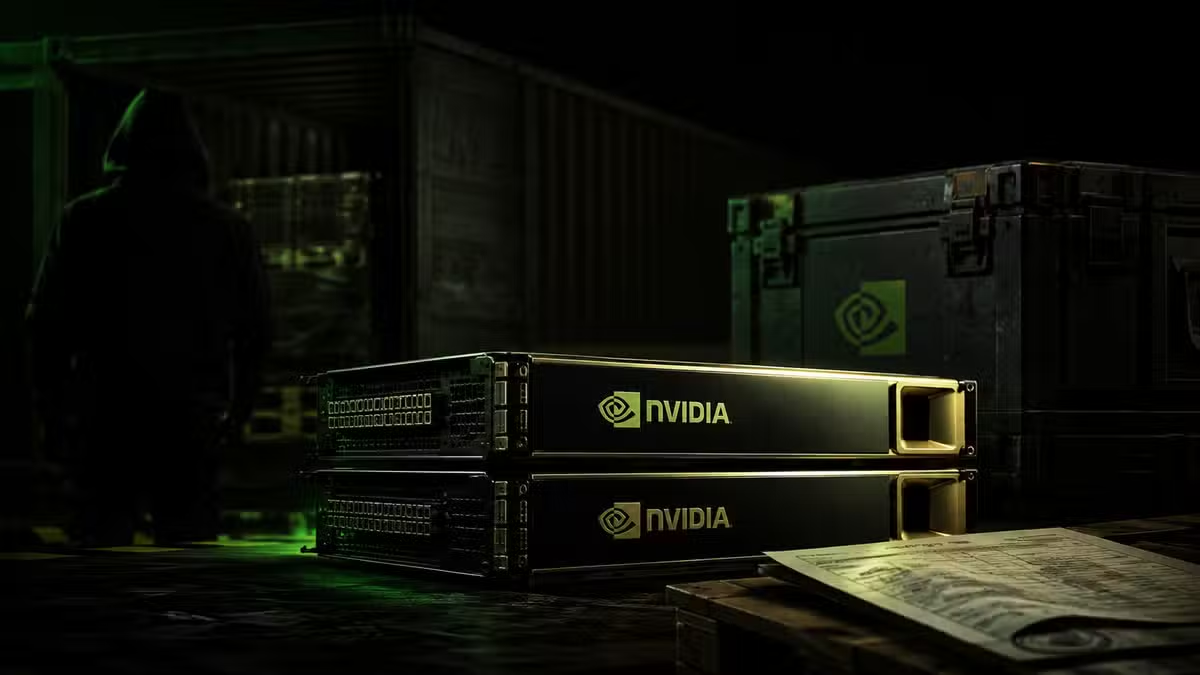
Taiwanese prosecutors have indicted nine people, including a senior Nvidia manager and two employees of Supermicro, over an alleged scheme to illegally export high-end artificial intelligence servers to China.
Prosecutors in Keelung have accused the suspects of offenses including breach of trust and document forgery. One individual connected to a related investigation reportedly remains at large.
The case highlights growing scrutiny surrounding the movement of advanced AI hardware as governments tighten controls on the export of high-performance computing technology to China.
According to investigators, the alleged scheme involved 130 servers equipped with Nvidia B300 AI hardware. Authorities say documents were falsified to make it appear that the machines had been installed and were operating at a facility in Taiwan.
Prosecutors allege that the documentation did not reflect what actually happened to the servers.
Of the 130 servers involved, 74 were allegedly exported and delivered to customers in China. Taiwanese authorities say another 56 servers were being prepared for shipment when customs officials detected irregularities and stopped the exports.
The investigation indicates that the alleged movement of the servers involved multiple locations outside Taiwan. Authorities reportedly identified routes involving Indonesia, Japan and Hong Kong as part of the operation.
The case is significant because advanced AI servers contain powerful computing hardware that can be used to train and operate sophisticated artificial intelligence systems. Such technology has become a major focus of international trade restrictions and national security policies.
Nvidia is one of the world’s leading suppliers of AI computing hardware, while Supermicro produces high-performance servers used in data centres and artificial intelligence applications.
The alleged involvement of employees linked to both companies has added another layer of importance to the investigation. Prosecutors will now seek to establish the individual roles of the nine defendants and determine how the servers were allegedly moved or prepared for export.
The reported use of falsified documents is also central to the case. Investigators allege that paperwork was created to show that the servers were being used locally in Taiwan even though some were ultimately destined for customers in China.
Taiwanese customs officials’ intervention prevented the remaining 56 servers from leaving the country, according to the allegations.
The investigation comes amid intensifying global competition over advanced semiconductor and AI technologies. The United States and other governments have introduced restrictions aimed at limiting China’s access to certain high-performance chips and computing systems.
AI servers equipped with advanced accelerators are particularly important because they can provide the computing power required for large-scale AI development. This has made the supply chain surrounding such equipment increasingly sensitive.
For technology companies, the case also underscores the importance of export-control compliance and accurate documentation when handling advanced computing products.
Any confirmed violations could have broader implications for companies operating in the semiconductor and server industries, particularly those involved in international supply chains.
It is important to note that the individuals involved have been indicted over alleged offenses, and the accusations remain subject to legal proceedings. An indictment does not by itself establish guilt.
The investigation is expected to draw further attention as Taiwanese authorities continue examining how the servers were allegedly transported through multiple jurisdictions and how the documentation was prepared.
The case adds to growing concerns over attempts to circumvent restrictions on advanced AI technology and demonstrates the increasingly complex challenges faced by authorities in monitoring international technology supply chains.