


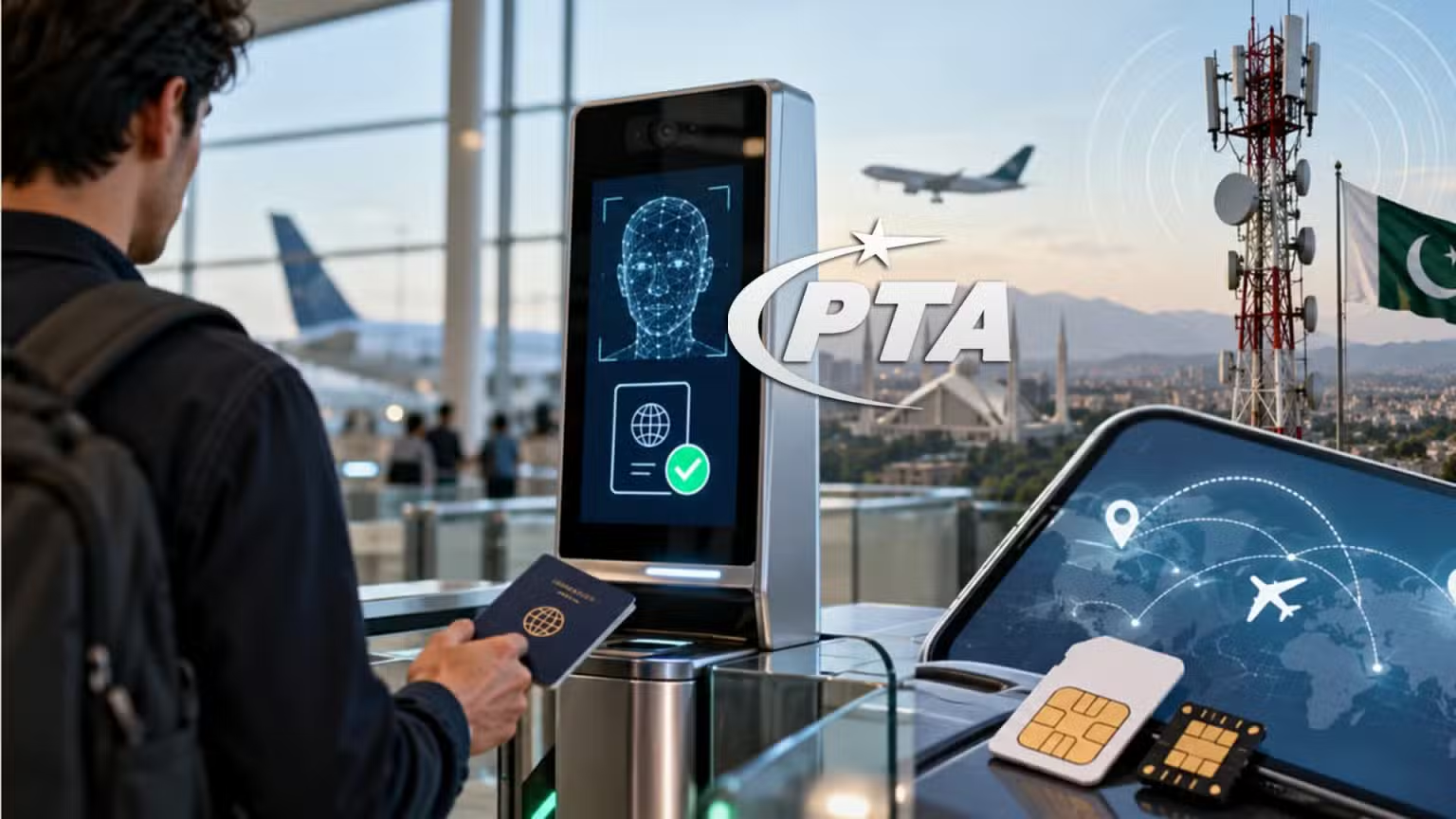
The Pakistan Telecommunication Authority (PTA) has proposed new regulations requiring identity verification for international roaming users who access Pakistani mobile networks through foreign SIM cards and eSIMs. The proposed measures aim to address security risks, prevent fraud and reduce the misuse of mobile connections that may be difficult to trace.
Under the draft International Roaming (Inbound) Regulations, 2026, mobile network operators would be required to introduce Know Your Customer (KYC) procedures for incoming international roaming users. If implemented, the rules could change how foreign visitors connect to mobile networks while travelling in Pakistan.
The proposed verification process may require users to provide essential identification and travel information before accessing local telecommunications services.
These details could include passport or travel document information, nationality, SIM or eSIM details, arrival dates, expected duration of stay and the name of the foreign mobile operator. The requirements are intended to help authorities and telecom operators establish a clearer record of international roaming connections.
Why Is PTA Proposing New Rules for Foreign SIMs?
Foreign SIM cards and eSIMs allow international travellers to use mobile services in Pakistan without necessarily purchasing a local SIM card. While international roaming offers convenience, the PTA has raised concerns about the potential misuse of connections that are difficult to associate with a verified individual.
The proposed regulations seek to strengthen accountability in the telecommunications sector. Identity verification could help operators maintain more reliable records of incoming roaming users and support efforts to investigate suspicious activities.
Fraud prevention and national security are among the key concerns behind the proposal. Authorities are increasingly focused on ensuring that mobile connections can be linked to identifiable users when required under applicable laws and regulations.
However, the proposal remains a draft regulation. Its final requirements, implementation timeline and practical impact will depend on the regulatory process and any subsequent official announcements.
How Could the Proposed Verification Process Work?
Under the draft framework, mobile operators would introduce KYC checks for users accessing Pakistani networks through foreign SIM cards or eSIMs. Travellers may need to submit relevant personal, identification and travel details to satisfy the proposed verification requirements.
The information could help telecom operators identify the foreign network provider associated with a connection and establish how long a visitor expects to remain in Pakistan. Passport details and arrival dates may also assist in maintaining accurate records of international roaming activity.
For travellers, the main consideration would be whether additional verification is required before or during their use of international roaming services. The exact process, including how information would be submitted and verified, has not been confirmed in the provided draft details.
Foreign visitors, overseas Pakistanis using international roaming services and people relying on travel eSIMs should therefore monitor official PTA announcements for further guidance.
What Does This Mean for Foreign Visitors and eSIM Users?
International travellers frequently rely on foreign SIM cards and eSIMs to stay connected while visiting Pakistan. These services provide access to calls, messages and mobile data without the need to immediately switch to a local network provider.
If the proposed regulations are adopted, some users may face additional identity verification requirements when connecting to Pakistani mobile networks. Travellers could need to keep their identification and travel information readily available to complete any required checks.
The potential impact will depend on the final rules, including whether verification applies uniformly to all incoming roaming users and how operators implement the requirements. Until further details are announced, users should not assume that any specific new registration procedure is already mandatory.
The proposal also highlights the growing importance of identity verification as mobile connectivity expands through digital SIM technology. Although eSIMs simplify international travel, regulatory authorities may still seek appropriate safeguards to prevent their misuse.
When Will the New PTA Regulations Take Effect?
The PTA has proposed the International Roaming (Inbound) Regulations, 2026, but the information currently available does not establish a confirmed implementation date. The draft should not be treated as proof that the proposed verification requirements are already in force.
Any final decision, compliance deadline or additional documentation requirement would need to be confirmed through official regulatory announcements. Mobile operators and international roaming customers should follow updates from the PTA before making changes to their existing arrangements.
The proposed rules represent a potential shift towards stronger identity verification for foreign SIM cards and eSIMs in Pakistan. If implemented, they could introduce additional checks for international roaming users while supporting broader efforts to improve telecommunications security and reduce fraudulent activity.
For now, the key takeaway is that the PTA is considering stricter KYC requirements for inbound international roaming connections, but the final scope and enforcement details remain subject to confirmation.