


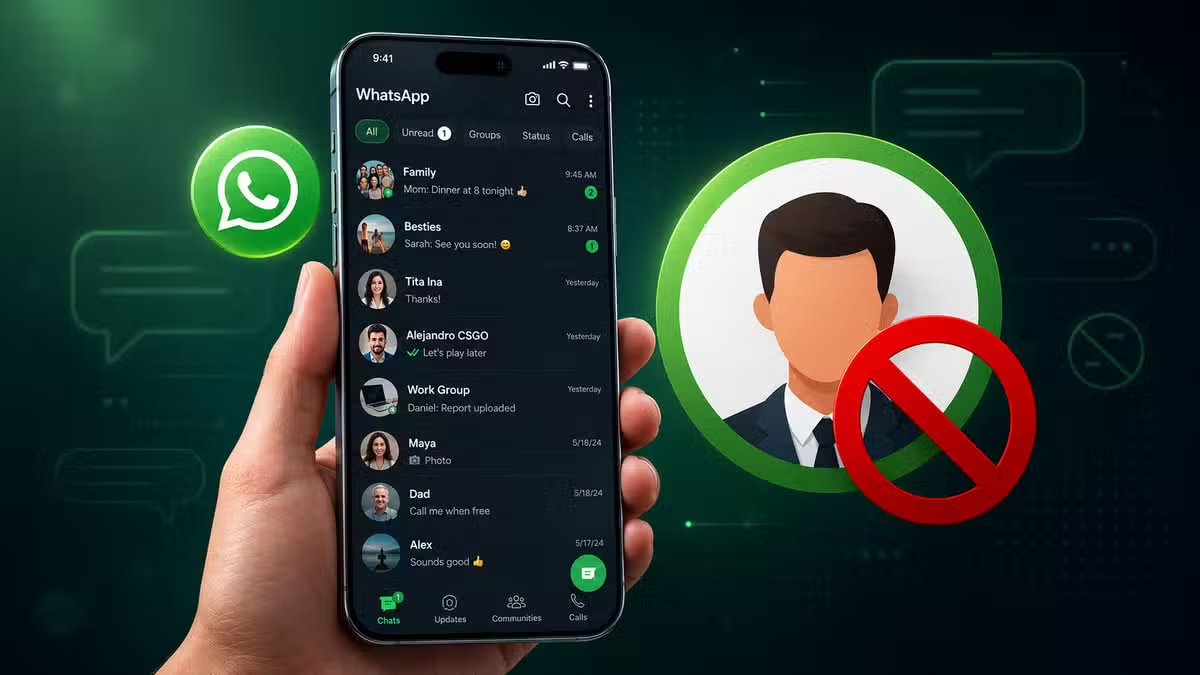
WhatsApp users are often curious to know whether they have been blocked by a contact, but most existing methods—such as checking profile visibility, last seen status, or message delivery ticks—do not always provide definitive answers. A new method circulating online now claims to offer a more reliable way to detect blocking without directly messaging the other person.
The method reportedly uses WhatsApp’s encryption verification feature to assess whether a user may have been blocked. Unlike traditional approaches that involve sending messages or making calls, this technique is described as more discreet since it does not trigger notifications for the other contact.
According to online explanations, the process involves checking changes or inconsistencies in encryption verification details within the app’s security settings. Supporters of this method suggest that discrepancies in encryption-related indicators could hint at changes in contact accessibility, potentially signaling that a user has been blocked.
However, there is no official confirmation from WhatsApp that encryption verification is intended to function as a blocking detection tool. The messaging platform, owned by Meta, has consistently maintained that privacy and encryption features are designed to secure communications, not to reveal user behavior such as blocking status.
As a result, experts caution that this method should not be considered definitive proof of being blocked. WhatsApp’s privacy architecture is designed to limit visibility into another user’s status and actions, meaning that indirect indicators can often be misleading or inconclusive.
In many cases, traditional signs—such as messages not being delivered, absence of profile photo updates, or inability to see last seen status—can still occur due to privacy settings rather than blocking. This makes it difficult to distinguish between intentional blocking and normal privacy configurations.
Cybersecurity analysts emphasize that while users may find such methods interesting, they should be interpreted carefully. Misreading app behavior can lead to incorrect assumptions, especially given WhatsApp’s strong focus on end-to-end encryption and user privacy controls.
Ultimately, while the newly circulated method adds to the list of techniques users try to determine blocking status, it remains unofficial and unverified. Users are advised to avoid relying solely on such indicators and instead consider multiple signals before drawing conclusions about their contact status.