


Huawei is reportedly exploring a new direction in foldable smartphone design, potentially introducing the industry’s first vertical tri-fold device as it continues to expand its innovation in flexible display technology.
The development follows Huawei’s milestone launch of the Mate XT Ultimate in 2024, which marked the company as the first manufacturer to release a commercially available tri-fold smartphone. The device set a new benchmark in foldable technology by demonstrating how multiple hinge systems could be integrated into a single handset.
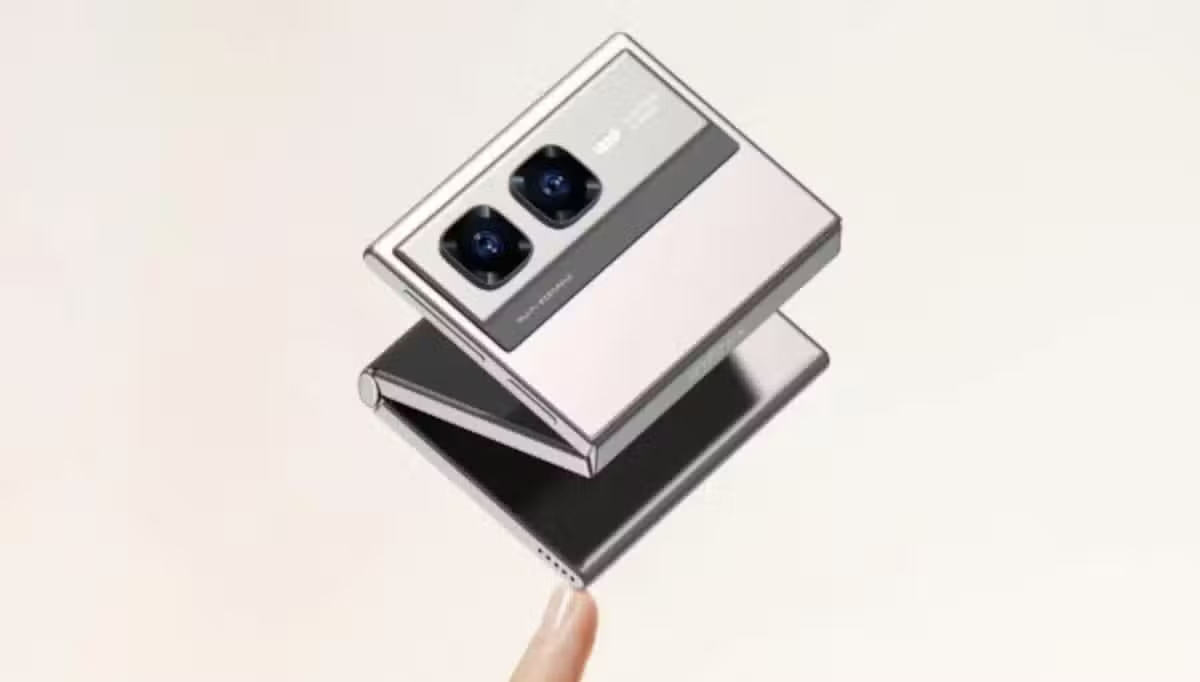
Recent reports suggest that Huawei is now considering a vertical tri-fold design, moving beyond the traditional horizontal folding concept used in existing tri-fold devices. The information is based on a newly surfaced patent shared by industry sources xleaks7 and PostFast, which outlines a compact form factor that could be applied to flip-style foldable smartphones.
Unlike conventional foldable phones that expand horizontally into a tablet-like display, the vertical tri-fold concept appears to focus on extending screen space in a more compact, pocket-friendly orientation. This approach could potentially combine the portability of flip phones with the expanded functionality of multi-panel displays.
Industry analysts note that if Huawei brings this concept to market, it could further strengthen its position as a leader in foldable innovation. The company has consistently invested in advanced hinge mechanisms, flexible OLED technology, and multi-form-factor devices designed to push the boundaries of smartphone engineering.
Foldable smartphones have become one of the most competitive segments in the mobile industry, with major manufacturers experimenting with different designs to improve durability, usability, and display quality. Huawei’s early entry into the tri-fold category has already set it apart from competitors, and a vertical tri-fold device could represent the next stage of evolution.
However, as with most patent-based developments, there is no guarantee that the concept will reach commercial production. Companies frequently file patents to protect design ideas and explore future possibilities without committing to immediate product launches.
If realized, the vertical tri-fold smartphone could reshape user expectations for foldable devices, offering a more versatile screen experience for productivity, entertainment, and multitasking in a compact form factor.
For now, the design remains speculative, but it highlights Huawei’s continued focus on pushing innovation boundaries in the rapidly evolving foldable smartphone market.