
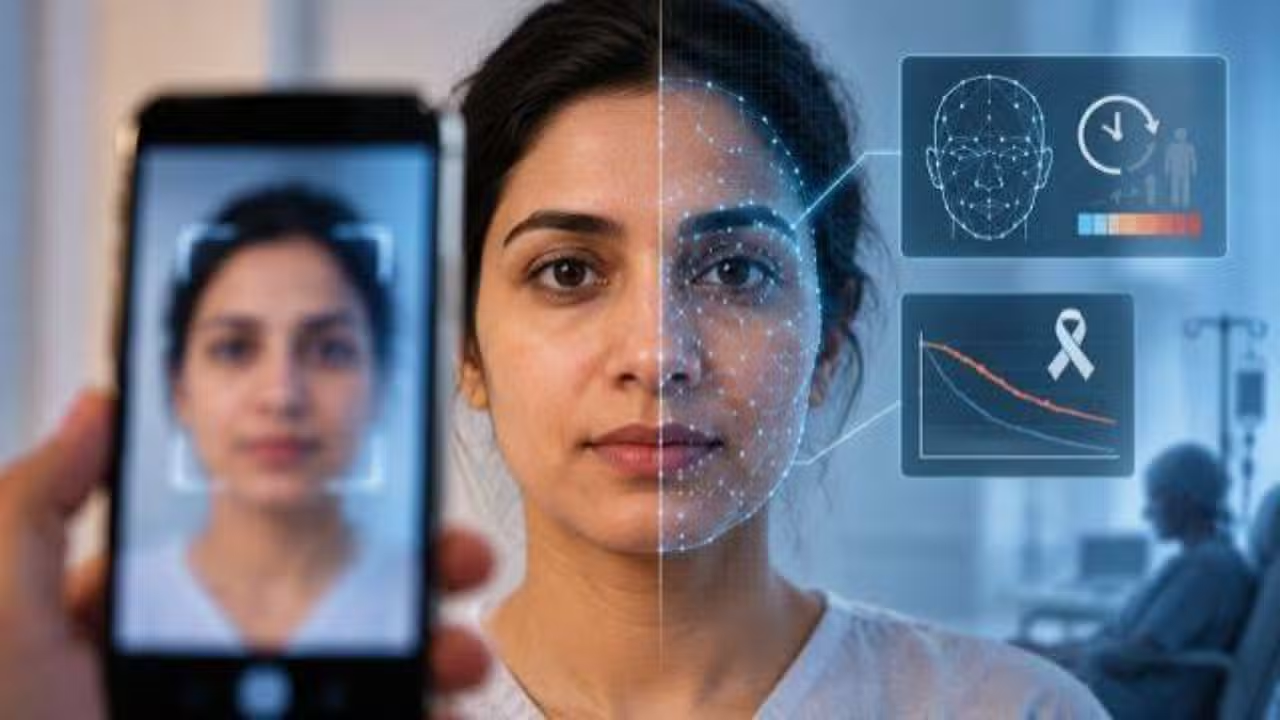
Researchers in the United States have developed an artificial intelligence tool that could help estimate cancer patients’ survival prospects using a single photograph of their face. The technology may eventually provide doctors with an additional way to assess patients’ health and support decisions about cancer treatment.
The system, known as FAHR-Face, was developed by researchers at Mass General Brigham in Massachusetts. According to research published in The Lancet Digital Health, the AI model analyzes facial images to identify patterns associated with biological aging and survival outcomes.
The technology was trained on more than 40 million facial images and adapted into two specialized tools: FAHR-FaceAge and FAHR-FaceSurvival. The first estimates biological age, while the second assesses cancer survival risk directly from facial photographs without depending on a biological-age estimate.
Biological age differs from chronological age, which is the number of years a person has lived. It attempts to reflect aspects of how the body is aging, potentially offering information that a person’s date of birth alone cannot provide.
Researchers believe facial images may contain subtle signs associated with a person’s overall health, physical resilience and aging process. AI systems can analyze these patterns in ways that may be difficult for the human eye to assess consistently.
The findings could be particularly relevant in cancer care, where doctors must consider a patient’s overall condition when evaluating treatment options. A tool that provides additional information about survival risk could eventually complement established assessments and help clinicians make more informed decisions.
However, the system is not designed to determine a patient’s exact lifespan or guarantee a particular medical outcome. Its predictions are based on statistical patterns identified in research data, and an individual patient’s prognosis depends on many factors, including cancer type, disease stage, treatment response and other health conditions.
The technology also raises important questions about how facial images should be interpreted in medical settings. Lighting, camera quality, facial expressions and differences between patient populations may affect how well an AI model performs. Researchers will need to establish that the tool works reliably across diverse groups before it can be widely used in clinical practice.
Although the findings highlight the growing role of artificial intelligence in healthcare, FAHR-Face should be viewed as a potential research and clinical-support tool rather than a replacement for medical examinations, diagnostic tests or professional judgment.
Further validation will be important to determine whether the technology can consistently improve cancer risk assessment and contribute to better treatment decisions. For now, doctors must continue to rely on established clinical evidence and individual patient evaluations when discussing prognosis and care.
The development reflects a broader effort to use AI to identify health-related information from accessible data, potentially creating new ways to support personalized medicine. If future studies confirm its usefulness, facial-image analysis could become an additional source of information for healthcare professionals treating people with cancer.