
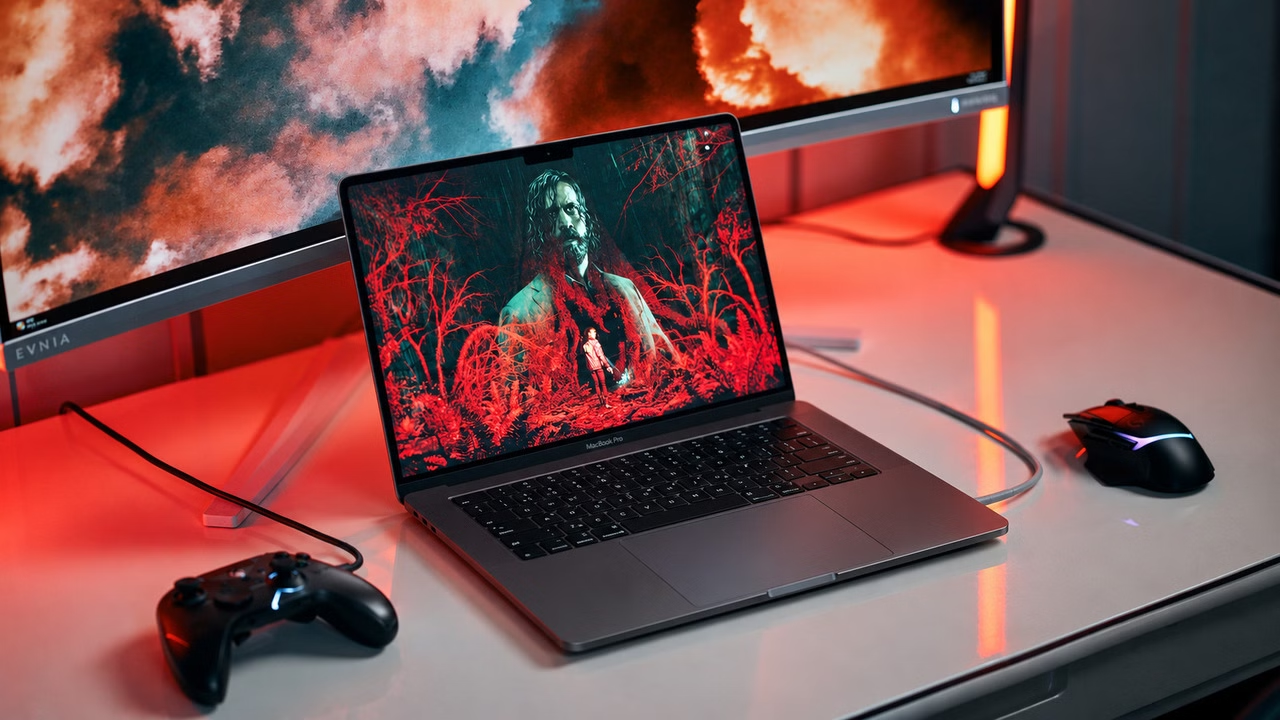
Google’s Gemini 4 Argon has drawn attention following an experiment that reportedly converted Alan Wake 2 from its x86 Windows environment to an Arm64 build designed to run on macOS. According to the experiment’s description, the converted game achieved more than 140 frames per second (FPS) on an Apple M3 Ultra system.
The experiment was shared on X by user @mweinbach, who described it as one of his favourite Gemini 4 Argon projects. He credited the AI system with handling much of the low-level engineering required to adapt the Windows-based game for Apple Silicon and macOS.
The reported achievement highlights the potential role of AI in complex software porting tasks, particularly when applications must be adapted across different processor architectures and operating systems.
Traditionally, moving a demanding PC game to another platform can require substantial engineering work. Developers may need to address differences in processor instructions, operating-system services, graphics APIs and other components that affect how a game runs.
According to the experiment’s description, Gemini 4 Argon tackled several of these challenges by creating Rust bindings for x86 instructions and operations, allowing the converted code to work with Arm-based processors.
This type of compatibility work is important because x86 processors, commonly used in Windows gaming PCs, and Arm processors, used in Apple Silicon Macs, rely on different instruction-set architectures. Software designed for one architecture cannot always run directly on the other without translation, recompilation or code changes.
The experiment also reportedly involved adapting the game from Windows to macOS and converting its graphics shaders to Apple’s Metal graphics technology. Metal is Apple’s graphics and compute framework, designed to provide applications with access to the company’s supported graphics hardware.
Shader conversion is particularly relevant for modern games because graphics programs determine how objects, lighting, shadows and other visual effects are rendered. A successful port must ensure that these components work correctly with the target platform’s graphics system.
Another notable aspect of the project was its reported use of ahead-of-time (AoT) compilation. Rather than relying on Apple’s Rosetta translation layer to translate x86 software for Apple Silicon during execution, the approach aimed to prepare compatible code before the game runs.
Avoiding a general-purpose translation layer can potentially reduce certain compatibility and performance overheads. However, the actual results depend on the quality of the conversion, the implementation of system-level components and the way the game uses its graphics hardware.
The reported performance of more than 140 FPS on an M3 Ultra is an eye-catching figure, but it requires additional context before it can be compared with conventional gaming benchmarks. Resolution, graphics settings, ray tracing, upscaling, test scenes and the precise hardware configuration can all influence frame rates.
It is also important to distinguish an experimental conversion from an officially supported Mac release. The supplied report describes an individual experiment, not an announcement that Alan Wake 2 has received an official native macOS version from its developers.
If the reported technical details are confirmed, the project could demonstrate how AI-assisted programming may help automate portions of complicated software migration. Such capabilities could potentially reduce the manual effort involved in adapting applications to new hardware platforms.
For Mac gaming, the broader question is whether similar techniques can be applied reliably to other demanding Windows titles. Each game presents its own challenges, including proprietary engine components, operating-system dependencies, graphics features and licensing restrictions.
The Gemini 4 Argon experiment therefore offers an interesting example of AI-assisted game porting, while its reported performance and compatibility claims remain dependent on independent verification and further technical details.